
← Back
NASM Announces New Rare Earth Deposit Model Across North America
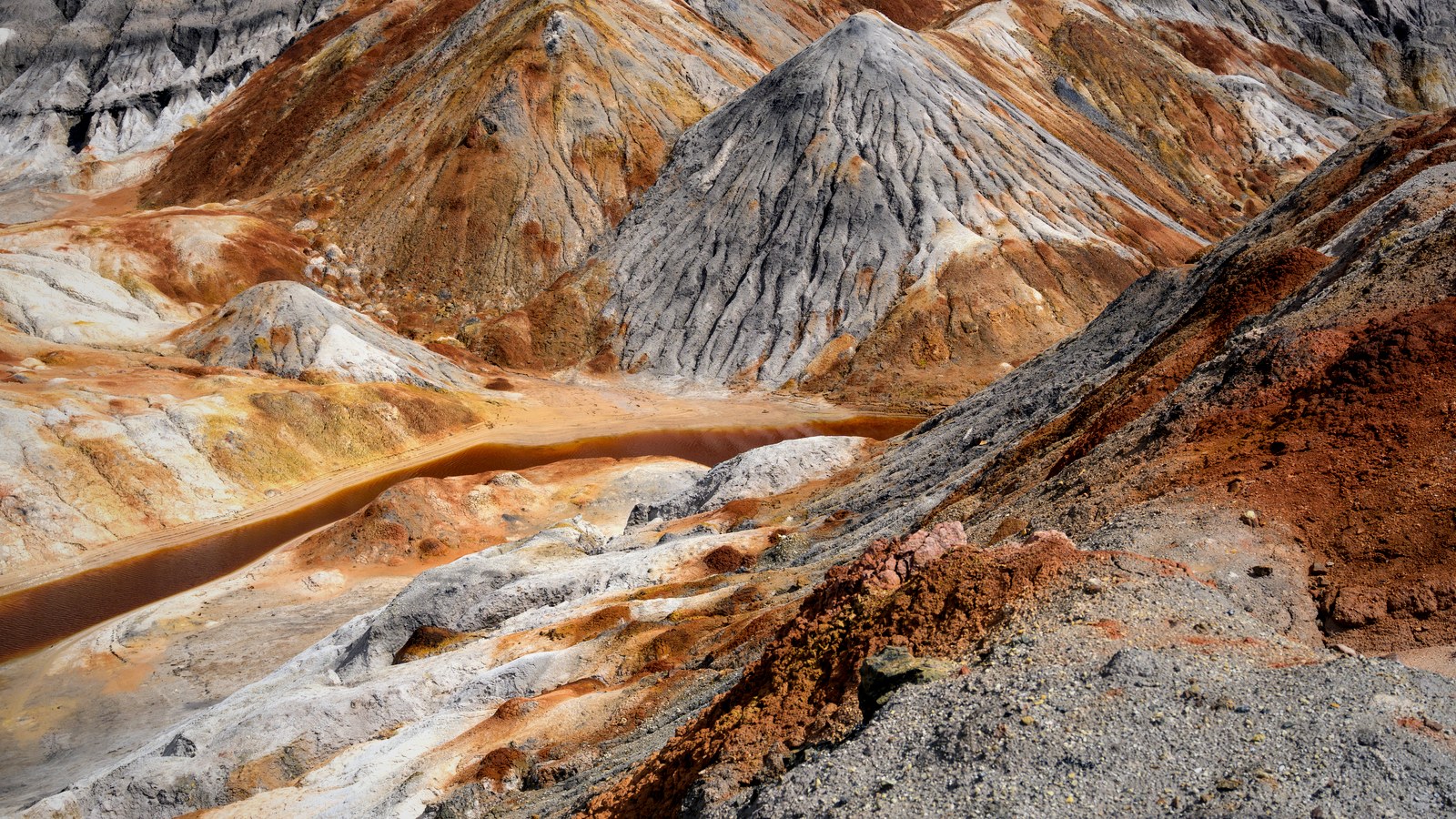
NASM announces a sediment-hosted rare earth exploration model across multiple North American target areas.
Archive note: This release was originally issued by North American Strategic Minerals Inc., predecessor to American Terbium Corp. It is retained for historical continuity. Company names, contact details, strategy, and technical statements speak as of the original publication date.
MIAMI, September 26, 2023 (GLOBE NEWSWIRE) - North American Strategic Minerals Inc., a private U.S. Delaware corporation, was formed in 2020 to explore for rare earth metals after its founders recognized a significant new geologic model for rare earth mineralization hosted in paleo basin pelagic sediments. Similar rare earth mineralization was first noted in modern basin pelagic sediments found at various locations on the Pacific seafloor. The mechanism of formation of this new type of rare earth mineralization is the direct precipitation of these critical metals from seawater into seafloor pelagic sediments.
The largest and most important of these rare earth seafloor metal precipitate deposits is known as the Minamitorishima deposit in the western Pacific. Technical details of Minamitorishima were first published in 2018 by a consortium of Japanese scientists who described this world-class rare earth deposit as having the potential "to supply these metals on a semi-infinite basis to the world." [1] Minamitorishima is considered to be the largest rare earth deposit in the world eclipsing all terrestrial deposits documented in China, Australia, Brazil, Vietnam, Greenland, and elsewhere. The Japanese are currently investing six billion Yen to advance and develop the Minamitorishima deposit.
After recognizing the significant importance of this new style rare earth mineralization, NASM has applied this new target model to its exploration activities in paleo basin sediments at various localities of North America since 2020. NASM's rare earth targets are found in a unique and very specific paleo basin sedimentary facies containing significant stratiform rare earth mineralization. This new style of rare earth mineralization discovered is distinctly different from common black shales or coal bearing sediments typically found throughout the world containing trace amounts of various minor metals.
The rare earth metals discovered by NASM are contained in paleo basin pelagic sediments as in-situ diagenetic elemental substitutions primarily within the crystal lattice of biogenic calcium phosphate minerals. Geochemical sampling on the Company's primary target at its Lost Basin project has encountered grades between 0.1% and 0.5% Total Rare Earth Oxides (TREO). The average grade of Minamitorishima is 0.1% TREO. Biogenic calcium phosphate concentrates are shown to contain up to 2.0% TREO at both Minamitorishima and at NASM's primary exploration target. This style of biogenic calcium phosphate rare earth mineralization is also very important as it is found to display rapid and high leach recoveries as reported by the Japanese researchers at Minamitorishima. Comparative data from both Minamitorishima and NASM's primary project area indicates Heavy Rare Earth Oxide contents of +35% TREO.
Mineral rights covering over 200 square kilometers have been secured by NASM and its wholly owned Canadian subsidiary on multiple targets in southern Manitoba and central South Dakota as NASM continues to explore this extensive sedimentary basin region for rare earth mineralization. Further evidence that this region contains this unique style of paleo basin metal precipitate mineralization is highlighted by the fact that central South Dakota contains the world's largest paleo ferromanganese nodule deposit in the 4,000 square kilometer region centered around the town of Chamberlain. This paleo Fe-Mn nodule deposit is in many respects similar to the vast Clarion-Clipperton modern seafloor ferromanganese nodule field in the central Pacific.
Other new targets identified by NASM are also found to host this style of paleo basin pelagic sediment stratiform rare earth mineralization in three states in the mid-continent region of the U.S. NASM is continuing to explore these new targets which, in places, contain laterally uniform and continuous grades of 0.15% to 0.2% TREO over strike length distances of 50 kilometers as seen from initial sampling.
Recently, in July 2023, Chinese researchers announced the discovery of "paleo-continental sedimentary rare earth deposits" [2] in Sichuan, Yunnan, and Guizhou Provinces and published that "these deposits have advantages over ionic clay rare earth deposits." We now believe that the Chinese rare earth industry has recognized and discovered the importance of this exact same style of rare earth mineralization that NASM has previously identified and has been working on since 2020.
The nearly identical host rock lithologies, mineralogy and rare earth grades between NASM's paleo basin pelagic sediment rare earth targets and the world-class Minamitorishima Pacific seafloor deposit is strong evidence supporting the discovery of a significant new rare earth deposit type.
Next month, NASM's Executive Chairman, Michael Thomsen, will be attending Metal Event's 19th Annual International Rare Earths Conference in San Antonio, Texas on October 19-20 and will be available to discuss NASM's projects with potential investors.
For further information on North American Strategic Minerals Inc.:
Website: www.strategicminerals.us
Email: info@strategicminerals.us
Francis Boulle, President & CEO - Founder
Michael Thomsen, Executive Chairman - Founder
Photos accompanying this announcement are available at:
References:

American Terbium Corp. Appoints Michael Pochna to Its Advisory Board
A piece explaining how tailings retreatment could reduce the path to first production to about 12 months instead of 7–15 years.

American Terbium Announces Company Name Change and Dy-Tb Focus
A piece explaining how tailings retreatment could reduce the path to first production to about 12 months instead of 7–15 years.

NASM Appoints Jack Lifton to Its Advisory Board
A piece explaining how tailings retreatment could reduce the path to first production to about 12 months instead of 7–15 years.

[ Partner with Us ]
American Terbium is developing a modular direct-leach platform to recover critical heavy rare earths—dysprosium, terbium and yttrium—from overlooked U.S. mine tailings and waste rock. Submit an inquiry to discuss investment, offtake or strategic partnerships.
American Terbium Corp. • Delaware Corporation • Founded 2020
Investor Inquiry
Offtake
